
10 September 2026 | See disclaimer
Quick Summary
- Car breakdowns can happen when you least expect them. Being prepared can help you stay safe and get help as soon as possible.
- This article discusses the fundamentals of roadside safety, such as how to pull over safely and what to do while you wait for help.
- Budget Direct has safety features for roadside assist customers, such as SMS verification codes and a live tracker to see where your service provider is.
Your Safety Comes First
If you think your car is about to break down, it’s important to stay calm and pull over to the left-most side of the road or, if you’re on a freeway, into the emergency stopping lane. Try to stop on a stretch of road that is straight and has good visibility for other motorists.
Once your car has stopped, turn your tyres away from the road to prevent your car being pushed back into the path of traffic if another vehicle were to collide with you.
Assess your situation for danger. If there’s a risk of fire or rear-end collision, exit via the passenger side and move to a safe area away from traffic, such as behind a barrier or on grass. If there’s no immediate risk and it’s safe to remain in your vehicle, keep your seatbelt fastened in case another car collides with you.
Signal Your Breakdown to Other Drivers
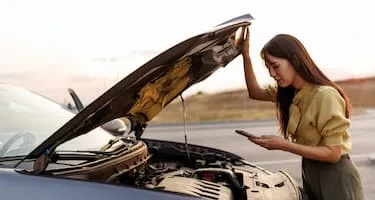
Switch on your hazard lights — the red triangle button in your car — to signal to other drivers that your car is broken down. Raising your car’s bonnet also signals to drivers that your car is broken down and you need help. If it’s dark out, your parking light can provide extra visibility.
Contact Roadside Assistance
Once you are safe, call roadside assistance. If you’ve already bought roadside assistance through Budget Direct, you can call us at 1800 514 448. You can also request roadside assistance through our online portal.
Non-members are also welcome to call Budget Direct for roadside assistance through 1800 700 027, although they will have to pay a $110 service fee and other potential fees.
Once a service provider is assigned, you’ll receive an SMS with a reference number and a link to a live tracker to monitor the location of your service provider. You’ll also receive a phone call from your service provider, who will identify themselves and verify your details.
Waiting for Help
Your service provider can only help if someone is present, so it’s important you stay with your vehicle. If anybody stops to offer help, let them know you’ve already contacted roadside assistance. If it’s a hot day, crack your windows to allow for airflow, and make sure to hydrate yourself.
Do not try to do your own repairs while on an open road, as this puts you at risk of being injured by open traffic. Stay calm, keep an eye on the live tracker, and wait for help to arrive.
The Best Way to Stay Safe: Be Prepared
Maintaining your vehicle regularly is the best way to minimise the chances of your car breaking down. If it’s overdue for a service, avoid long drives and at a minimum ensure your car’s coolant and oil levels are topped up, and your tyres are inflated to the correct pressure. Any strange noises are a signal a breakdown might be about to happen.
Keep an Emergency Kit in Your Car
Keeping a car breakdown safety kit in your car can be very helpful when your car breaks down. Objects like a torch with spare batteries, a high-vis vest and a first aid kit, are great to have on hand. So, too, are a water bottle and an emergency muesli bar. (An emergency roll of toilet paper could be helpful, too.)
Prepare Before Travel
If you’re travelling a long distance, make sure you let at least one person know where you’re going and when you expect to arrive. This way if you can’t phone for help, you have someone who can when you haven’t arrived on time.
See More Guides