
13 April 2026 | See disclaimer
You want to be a fair landlord. You know how difficult it is to secure housing, and understand that pets are precious family members for many people. However, when a tenant asks if they can start living with a Border Collie, you may find your values pulling you in two different directions: wanting to do right by your tenants while also protecting an investment you’ve worked hard to build.
Pet tenancy laws vary significantly from state to state. As a landlord, it’s worth understanding the rights of both you and your tenant before responding to any pet requests. Failing to follow the correct processes — such as refusing a pet request without a reasonable cause, or not responding within the required timeframe — could leave you exposed to a tenancy dispute. Equally, allowing a pet while neglecting to write any reasonable conditions into the tenancy agreement could leave you footing the bill if the animal damages your investment property.
In this article, we will explain state legislature with regard to tenant pet ownership, what reasonable conditions you can put in a tenancy agreement and how landlord insurance factors in when dealing with pets. However, this information is not personal or legal advice, and we recommend that you seek your own legal guidance and undertake research for your own individual circumstances.
Why Pet Tenancy Laws Matter for Landlords
When you’re becoming a landlord, the reality of a tenant owning a pet isn’t one you can avoid forever. As of September 2025, 73% of households nationally across Australia own pets. [1] This means it’s not unlikely that applicants with pets are going to become more and more common.
There has also been a national trend towards pro-tenant pet reform, such as the October 1 2022, changes in Qld disallowing landlords for refusing pets without reason [2], and similar changes in Tasmania that came into effect as recently as March 2026. [3]
Even if you internally prefer tenants that don’t own pets when you’re fielding rental applications, there’s nothing stopping a tenant from requesting to get a pet once they move into your rental property. Therefore, you will need to be prepared for pet request forms from all kinds of tenants, understand what the procedures are and know what your rights as a landlord are.
Can a Landlord Refuse a Pet?
The laws around refusing existing tenants from keeping pets depends on the state or territory your investment property is in, so it’s important to familiarise yourself with the rules of your state.
Every time a landlord receives a pet application form from a tenant, they normally have a timeframe to respond to the request. If a landlord doesn’t submit a response within that timeframe, the application may automatically be declared as approved.
This isn’t to say that a landlord is unable to reject a pet at all. If a landlord wishes to refuse consent for a pet application, they can submit a written response with reasonable grounds as to why to your state’s rental authority. For example, according to the Residential Tenancies Authority (RTA) in Queensland, pets can be rejected for a number of reasons. This includes if a rental property is unsuitable for outdoor pets due to a lack of appropriate fencing, if the pet would cause an unacceptable health risk to people on the property (for example, if a pet is venomous) or if the pet is likely to damage the home that would exceed the rental bond for the property. [4]
It must also be noted that throughout Australia, these pet laws do not apply to people with assistance dogs such as guide dogs, hearing dogs, or seeing eye dogs.
| State/Territory | Can a Landlord Refuse Pet Application Forms Without Cause? | Response Timeframe for Pet Application |
|---|---|---|
| ACT | No | 14 days |
| NSW | No | 21 days |
| Qld | No | 14 days |
| SA | No** | 14 days |
| Tas | No** | 14 days |
| Vic | No | 14 days |
| WA | No** | 14 days |
**In these states, body corporate/owners corporation bylaws in strata or community title properties may override a landlord's approval and are allowed to have blanket bans on pets. Check applicable strata rules before submitting an approval form for a pet in your strata building.
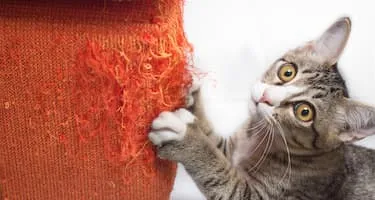
It’s best to keep in mind that Landlord Insurance doesn’t cover loss or damage caused by animals that your tenants own. Instead, there are some measures you can take to best protect your rental property from pet damage. This includes conducting inspections, taking images of the home before renting it out and including pet conditions in the tenancy agreement contract so you have it in writing.
Pets in Strata Properties
While landlords across Australia are no longer allowed to place blanket bans on pets in their residential tenancy agreements, in some states, strata schemes can still pass by-laws prohibiting them entirely.
There are three different by-laws related to keeping animals in strata properties:
- If there is no specific by-law about pets, then tenants do not need to ask for permission to keep an animal within the rental property.
- If there is a permissive by-law about pets, then tenants can request approval by writing to the committee as an owner, occupier, prospective purchaser or occupier. The committee cannot unreasonably refuse a pet request.
- If the body corporate has a prohibitive by-law, this means that they don’t allow pets and the committee cannot approve an animal that the by-laws prohibit.
There have been reforms in some states (such as Qld, NSW, and VIC) disallowing blanket bans on pets by strata companies. However, tenants still need to seek permission and follow certain body corporate by-laws. For example, in Qld, while they cannot disallow owners from owning pets entirely, a body corporate can refuse a pet request if they have reason to believe it will create a nuisance to other residents through excessive noise, or will interfere with native wildlife that visit the scheme land. This could limit tenants who own a loud dog, or tenants who let their cats roam outdoors and hunt local wildlife. [5]
Meanwhile, in states like NT, SA, and Tas, body corporates are allowed to have prohibitive by-laws which place a blanket ban on pets with no possibility of approval process [6], meaning tenants can’t keep pets even if they had the landlord’s permission.
Make sure to research the laws around pet ownership in the state or territory that your investment property is located, as they can override your personal preferences as a landlord.
What Conditions Can You Put on a Pet Approval?
As a landlord, you may be able to include reasonable conditions in your tenancy agreement that a tenant must meet in order to have a pet approved.
You should research which conditions are considered as reasonable in the state where your investment property is located, as they can vary, but some examples of reasonable conditions are:
- The pet must be kept outside the rental property if it’s not an animal that usually lives inside (such as a chicken or a pig).
- Allowing no more than two pets at a time in the property,
- The property must be professionally fumigated and/or hire professional carpet cleaning at the end of the tenancy if a pet is a mammal (such as for an indoor dog rather than a goldfish).
With the exception of some states, unreasonable conditions for a tenant having a pet would be: charging a separate pet bond, requesting more money for the current rental bond or increasing the rent in exchange for allowing a pet in the property.
Does Landlord Insurance Cover Pet Damage?
Landlord Insurance is a very important cover for landlords to keep their property safe. However, generally, Landlord Insurance does not cover loss or damage caused by animals or birds owned by tenants or visitors which are kept at the rental property. Also, it normally doesn’t cover any normal wear and tear caused in the property or any untidy, unclean or unhygienic habits of the tenants relating to animals kept at the property.
Important: Most standard landlord insurance policies do not cover pet damage as a standalone event. Check your Product Disclosure Statement to understand exactly what your policy covers.
It’s important to understand the potential financial risks of pet damage that isn’t covered by insurance, as you can incur many costs to get your home professionally cleaned and repaired. For example, sanding and polishing wood floors can cost anywhere from $30 to $60 per square metre, [7] while carpet replacement can cost between $20 to $65 per square metre. [8] And these aren’t counting the potential for additional costs, including flea treatment or repair to your lawn or garden.
How to Protect Your Property When Renting to Pet Owners
So with all this in mind, the best way to protect your rental property from pet-related damage is to be proactive. Here’s a practical numbered list you can follow before your tenant moves in:
- Complete a thorough condition report with photos before the tenancy begins.
- Include approved pet conditions in writing in the tenancy agreement contract.
- Conduct periodic inspections as permitted by state law. For example, in NSW you can inspect the rental property no more than once every four weeks [9], while in Vic you can only inspect the property every six months. [10]
- Review your landlord insurance PDS specifically for pet and tenant damage exclusions.
- Keep all written correspondence regarding pet requests and approvals.
- When the tenant vacates, complete a comparative condition report immediately to assess any damage and see what you can potentially claim from the tenant’s bond.
By taking these steps, you can help ensure that your property has some appropriate protections and is as close to its original state before it was leased.
See More Landlords Guides