
16 April 2026 | See disclaimer
It’s tempting to DIY when it comes to home improvement and repairs, and it’s easy to see why. Rising tradesperson costs and wait times are a real phenomenon. A combination of too much tradie demand plus not enough tradies to go around has made it difficult to access professional help. [1]
Despite this, picking up your tools and attempting to do risky DIY work has the potential to negatively affect your home insurance policy.
No matter how confident you are in your own ability, there’s the harsh potential for injury or death caused by falls, accidental electrocution, and chemical exposure. Here are five types of home projects that should be performed by professionals only.
Electrical Work
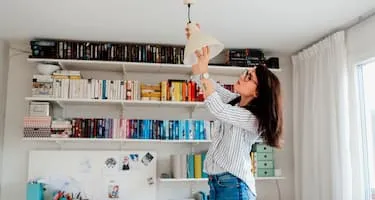
Imagine this: you’ve watched a tutorial on YouTube on how to change a PowerPoint in your home. Seems simple enough. You take off the PowerPoint cover and accidentally touch a wire, and suffer an extremely dangerous shock. Electrical shocks like these are highly dangerous, capable of causing burns, internal injuries, and even death.
Important: In Australia, the law mandates that all fixed electrical work must be performed by an appropriately licensed electrical contractor. A home insurance claim for loss or damage made that was caused from the result of unlicensed electrical work may be declined due to exclusions in the policy.
Licensed electricians are trained to perform electrical works safely and to follow the AS/NZS 3000 Wiring Rules [2], a standard which gives electricians the exact procedures on how to safely conduct electrical installations in a way which prevents electric shocks and injuries, and create compliant work that should cover you for your home insurance.
Plumbing and Gas Fitting
Plumbing is one of the most important home works to get right, as so much can happen when they go wrong. This isn’t just due to a sudden pipe failure or a blocked toilet, but also the slow leaks that can take months or even years to notice.
Insurance policies will define what’s covered between a sudden pipe burst and slow liquid leaks. Common causes for water damage are flexi hoses, which could cost up to tens of thousands of dollars in restoration services. Damage to your home’s structures can become extremely expensive, which is why it’s important to make sure your plumbing is properly installed and maintained by a professional.
Then there’s gas fitting. Gas leaks are extremely dangerous as they can be odourless and have long-lasting health and respiratory risks, or create a highly combustible environment if someone so much as lights a match. So if any gas appliances are wrongly fitted or have inadequate ventilation, they could pose a serious health hazard.
What might seem like an easy fix that you can handle could lead to catastrophe if the work is not done right. A licensed plumber will have the appropriate certification and training in plumbing and gasfitting and may help to mitigate the potential insurance risks associated with DIY. This way, they’ll be able to make sure your plumbing systems are properly installed and that your gas appliances are properly ventilated.
Roofing
Having well-maintained roofs is vital to the overall maintenance and longevity of your home. When your roof leaks, the water may continue accumulating and travelling downwards through every crevice and porous surface in your house, eventually causing major damage.
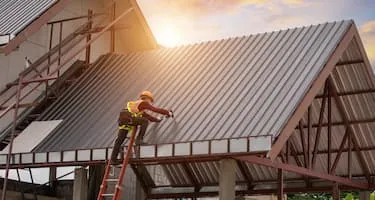
While you might want to desperately fix the problem, you could cause even more damage to the roof if you don’t know exactly what you are doing. Doing your own roofing leaves you at risk of falling and injuring yourself. Before you climb onto the roof, ask yourself how you will react if you encounter a possum, a snake, or a huge spider runs up your leg. Would you slip and fall?
SafeWork Australia states that any work with a risk of falling more than two metres is considered high-risk construction work. Working at those heights requires adequate protection from falls, providing barriers, scaffolding, elevating work platforms or a safety rope access system. [3]
This doesn’t mean you should completely neglect roofing maintenance, as your insurance claim can be denied if it’s discovered that your home wasn’t maintained in good condition. Make sure to read the PDS for more details on maintaining your home insurance.
All in all, it’s best practice to hire a professional roofer. They will have access to appropriate safety equipment, be trained on how to deal with any roof-dwelling critters, and make sure your roof is appropriately maintained and free of damage.
Home and Contents Insurance may cover your roof from falling trees, debris, fallen power lines and more.
Structural and Load-Bearing Work
If you want to make structural changes to your home, such as knocking down walls or constructing new rooms, you need to delegate to an expert.
Depending on the type or value of the work, you usually need council approval before doing any major building works. For example, the Victorian Building Authority requires a building permit before any demolition works are conducted, which can only be granted with consent from your local council. This is because demolishing walls can release toxic materials, such as asbestos fibres. This can put not only yourself but your neighbourhood and environment at serious medical and legal risk if proper methods aren’t used.
Another major reason for hiring a professional is that doing major structural changes, such as removing a load-bearing wall, can affect the overall stability and safety of your home. A licensed professional will be experienced in safely removing walls without risking the integrity of the whole structure.
Finally, doing major renovations to a home can present issues when you’re trying to sell the home. For example, if potential buyers realise there are unapproved structures in the home, they might use this as leverage in negotiations to ask for a reduced price due to the liability being passed onto them. [4]
Whenever you’re doing any kind of major building or remodelling work, it’s helpful to read up on home building standards and insurance. It’s always best to follow the relevant building codes, gain council approval and hire a licensed professional.
Asbestos Removal
Asbestos is a building material that was historically used in domestic settings between the 1940s and 1980s for water pipes, corrugated roofing, insulation and walls for their fire-resistant properties. [5] According to the Australian Government Asbestos Safety and Eradication Agency, if your house was built or renovated before 1990, your home likely has asbestos. Asbestos particles pose a large risk when inhaled, causing lung cancer, mesothelioma or asbestosis. [6]
It’s for these reasons alone that you should leave asbestos removal to an expert. It is ill-advised to try removing asbestos by yourself. Not properly disposing of asbestos, using the incorrect cleaning material, or not having the right protective equipment could not just result in your lungs and home being contaminated, but also leave you in danger of getting fined.
That’s why it’s important to hire a professional with an asbestos removal license. They will have the right tools and equipment, follow safe removal practices, and legal disposal methods.
How to Verify Your Tradesperson
Before you engage with a licensed trade person — such as an electrician, a builder, a plumber, a gas fitter, or an asbestos remover — a good way to protect yourself is by verifying their license.
To check that everything is above board with your tradie, make sure to ask for your tradie’s licence number, check the status is active, that the license type covers the category of work you’ve hired them to do (for example, that your tradie is certified in electrical work before letting them touch your house’s electrical wiring), ensure the expiry date is long after the end of the scheduled start of your project and that the invoice matches the licensee listed.
Each state has their own licensing body where you can verify the details of each tradie. We’ve gathered all of the relevant license registries in this easy-to-read table:
| State | Body Name | License Registry |
|---|---|---|
| ACT | Access Canberra | https://services.accesscanberra.act.gov.au/s/public-registers |
| NSW | NSW Fair Trading | https://verify.licence.nsw.gov.au/home/Trades |
| QLD | QBCC | https://my.qbcc.qld.gov.au/myQBCC/s/qbcc-licensee-register |
| SA | CBS | https://secure.cbs.sa.gov.au/OccLicPubReg/index.php |
| TAS | CBOS | https://www.cbos.tas.gov.au/topics/licensing-and-registration/search-licensed-occupations/find-a-licensed-tradesperson |
| VIC | VBA (building and plumbing), Energy Safe Victoria (electricity) |
https://www.vba.vic.gov.au/tools/find-practitioner https://www.energysafe.vic.gov.au/licensing/search-public-register |
| WA | Building and Energy WA | https://www.wa.gov.au/organisation/building-and-energy/building-and-energy-licence-and-registration-search |
It’s important that you check your tradie’s licence for a variety of reasons. For one, not only do you risk shoddy and unsafe work that needs to be redone, but you could also have rejected insurance claims due to defects and structural faults as a result of unlicensed work.
Once you’ve completed your renovation or home repair, consider any changes to your home’s replacement value and decide what you think your newly renovated home is worth before updating your sum insured amount. You can use our Home Replacement Cost Calculator to help you decide what you think the figure may be. Get a combined Home and Contents Insurance quote and save up to 30%^ (15% Online + Up to 15% Combined) off your first year’s premium online.
See More Home Improvements Guides