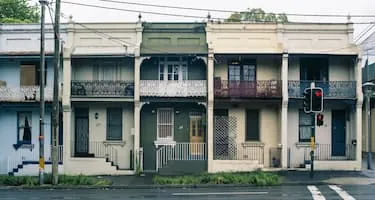

25 February 2026 | See disclaimer
If you’ve ever wondered what style of home you live in, you’re not alone. Part of the great Australian dream is to own a home, but does anyone actually know which style of house they live in?
Depending on your life stage, you may have shared an old Queenslander as a young adult, purchased a post-war house as your first home and built a contemporary style home when you were ready to start a family.
Each property comes with its own unique Australian architectural style, reflecting the wide range of housing styles found across Australia. So whether you’re planning to buy a new home, are looking for information on the features in your home, or you’re insuring your house and would like to know which exclusions may apply, then read on to find out the diverse range of house styles Australia has to offer.
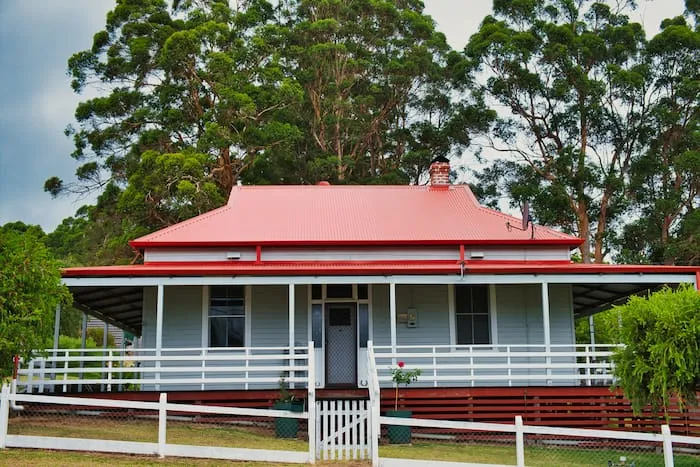
Colonial & Workers Cottages (1800-1930)
The first major waves of architectural styles in Australia date back to the Colonial era, ranging from 1788 to the workers cottages built up to 1930. Before the 20th century, the first European style of home seen in Australia was known as the Colonial-style home. Built during the colonisation of Australia, these homes were initially constructed using materials from the environment, including thatched reed or bark peeled off in large sheets for roofing, clay for bricks, and more often than not these homes were held in place by thick branches. While common at the time, these types of building standards are not commonly accepted for modern home insurance policies!
Once importation of materials became more frequent, items like glass, bricks and corrugated iron roofs were more readily available and used throughout the country. With small multi-pane windows and large verandahs, these types of houses resembled what was being built in England at the time and were heavily influenced by English culture by the likes of writers, musicians, architects, and other creatives who began relocating to Australia.
Federation (1890-1920)
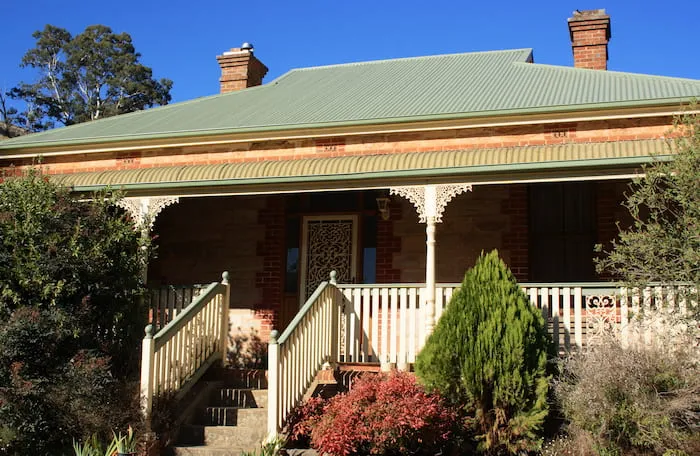
Also known as Edwardian-style houses, Federation homes are characterised by their red brick exteriors, stained glass windows, cast iron lacework, return verandahs, bay windows, and roofs in either slate or terracotta tiles.
The federation style is defined by its distinctive Australian motifs, ornate timber fretwork, and period-specific interior details, making it a unique blend of Edwardian and Victorian influences. There are 12 federation styles, but only four were regularly used in residential architecture, including the Federation Queen Anne style, Federation Filigree style, Federation Arts and Craft style, and the Federation Bungalow style.
The Federation Bungalow was Australia’s answer to the Bungalow style created in the US and is often viewed as a mix of the Federation Queen Anne style and the California Bungalow. Over the next two decades, the Bungalow style would continue to evolve.
Art Deco, California Bungalow and Interwar (1930-1939)
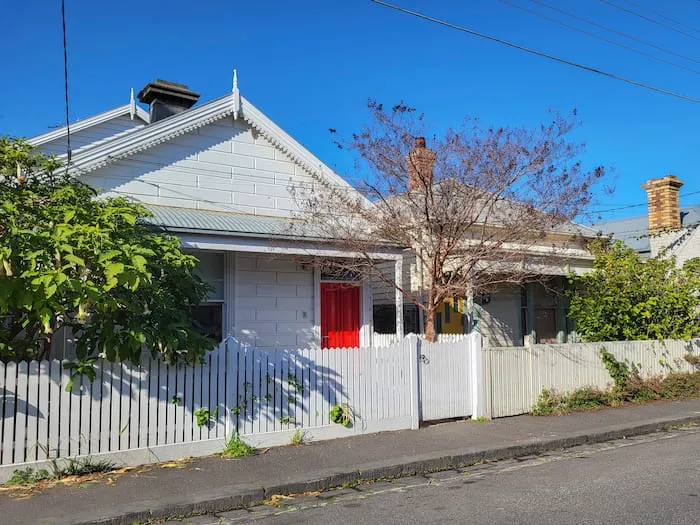
Art Deco homes are an art, style, and design movement that was loved during the interwar period and was an influential style in Australia up until World War II. These homes can be categorised by their curved facades, decorative brickwork, geometric elements and metal-framed windows that allow for ample natural light and mottled tiles, usually in pink, mint, lemon, or pale blue.
Australian houses that were built in this Art Deco style also embraced Art Deco motifs in brickwork, balconies, chimney designs, ceiling moulds, and incorporated curved forms and nautical elements, like curved walls and porthole windows. Most Art Deco homes included the likes of timber veneer wall panelling, adding a distinctive decorative element to these houses.
The Californian Bungalow was originally adapted in the early 20th century and shares many similarities with its earlier counterparts. These became quite popular to build in Australia during the 1920s and 1930s and are loved for their single-storey designs and widespread verandahs. In Australia, California Bungalows are made from red brick, featuring natural textures and earthy colours, creating an inviting and cosy atmosphere to live in.
The Interwar style house is most recognisable by its limited ornamentation, horizontal focused design, glass doors, and two-wheel strip driveway with elements of modern design. As more people started to travel, they brought back new ideas and architectural styles from around the world that were incorporated into the new homes.
Post War (1940-1949)
The end of the Second World War sparked the introduction of the Post-War home. This period proved to be very challenging for the Australian economy with shortages in housing materials, a post-war baby boom, and general unrest. It led to new opportunities in building and infrastructure, starting with cheaper materials and faster construction of brick veneer homes.
We also needed more homes during this period to accommodate the large number of European war refugees who were sent to settle in Australia through the assisted immigration program. They lived in brick bungalows, fibro cottages, and what we would call early modernist designs today. The Post War homes are characterised by their hardwood polished timber floorboards, large panes of glass and decorative plaster ceilings, shaping Australian residential architecture.
Mid-Century Modern (1950-Present)
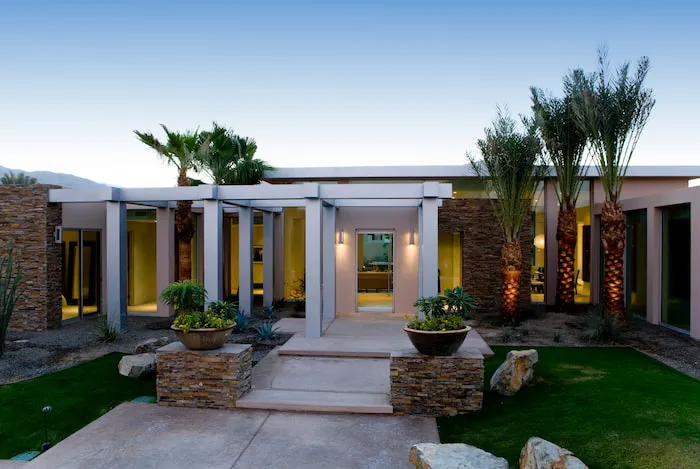
One of the most impactful property types in Australia was the Mid-Century Modern home. While still popular today, this style was influenced by European and American ideas, connecting indoor living with outdoor living. These properties can be characterised by their large glass windows, cross ventilation, geometric walls, flat roofs, open floor plans and exposed structural materials with an emphasis on natural finishes.
Following World War II, thousands of Mid-Century-style homes were built across Australia and they continue to be a popular style of architecture even to this day.
Queenslanders (1960-1979)
The Queenslander home is a classic Australian architectural style. It was first built in 1840, but wasn’t cemented in the Australian architecture landscape until the 1960s and 70s. These homes are known to have iconic features such as bedroom bay windows, sprawling verandahs built to catch the summer breezes and white VJ panelling from floor to ceiling.
Over time, the design of the humble Queenslander has evolved and been restored, but the reason why these types of homes were designed was to protect homeowners from extreme hot climate conditions.
Queenslander homes are typically built on a high set of timber stumps and have metal roofing to keep cool. These types of homes were commonly built with the likes of dense, naturally fire-resistant hardwoods, including Blackbutt and Spotted Gum, to reduce the risk of bushfires.
One of the biggest misconceptions around Queenslander homes is that they actively attract termites, when in fact, termites are drawn inside a home by moisture and cracks in building exteriors, regardless of the construction materials. Damage or loss caused by termites won’t be covered by most insurers and are typically included on a general exclusions list.
Ranch (1990-1999)
The Ranch style home originated in the US and became popular in Australia during the 1990s. These homes were typically one storey, horizontal in design, and had tiled roofs with extended eaves, large glass windows, and a garage that was integrated into the house.
While the Ranch style in Australia may not always be true to its American form, several similarities remain. These types of homes in Australia are still designed in an L or U shape, taking the focus away from the streetscape and putting it on backyard living. The open-plan design of these homes also fosters an informal and casual lifestyle, allowing for more wider and multi-functional spaces.
It’s important to note that prior to 1990, asbestos was used as a binding product in materials including wall and floor sheeting, roofing and pipes. It was also used in thermal insulation, fireproofing and brake linings. While any home built before 1990 may have asbestos in its materials, it’s homes built between the 1940s and 1980s where asbestos was most commonly used.
In most cases, asbestos is included in your list of general exclusions (as part of your home insurance policy), and you’re not covered for loss, damage or legal liability caused by asbestos at the insured address.
Contemporary (2000-Present)
In recent years, more eco-friendly modular homes or prefabricated homes with a modern style have become very popular, especially if you’re looking for a structure that typically produces less waste and uses less energy than a conventional house. These contemporary homes are designed with easy assembly and climate adaptability in mind, with sustainable features such as solar panels and rainwater harvesting.
The majority of today’s modernist styles are considered contemporary in their design, with many contemporary Australian homes reflecting current design trends. Typically, contemporary homes will feature functional living with a large open-plan design where a number of rooms are in the same space. Popular coastal and modern farmhouses are also a popular and modern choice to build, with many Australians opting for these sub-style homes.
In contemporary houses, the kitchen, dining, and lounge room areas are normally found at the heart of the home and act as a multifunctional space for homeowners and their families. As well as their open-plan spaces, contemporary homes are built with a spacious feel in mind and are characterised by a minimalist design, natural materials and bright lighting from large glass windows.
Newly renovated older homes and the extension of Queenslanders are currently emerging as a new category in the contemporary Australian architecture landscape as home owners enhance the original design of their heritage houses to accommodate for their larger families and modern lifestyles.
Regional Variations in Australian Homes
Due to Australia’s sprawling landscape and diverse climates, each state has various architectural styles tailored to different local weather conditions. In Queensland, homes are built to withstand the humidity and hot climate with open layouts and large windows to keep the interiors cool, which have become some of the most popular architectural styles in the state. Similar to the Northern areas, South East Queensland homes feature high timber stumps to avoid floodwaters and are built with specific timbers to reduce the risk of bushfires.
In contrast to these homes, cooler southern regions, such as Victoria, are built to retain the warmth. These are typically designed with solid red brick or stone, small windows and built with insulation to mitigate the cold weather.
While traditional Australian rural homesteads in other parts of the country are built with long sloping tin roofs and wide verandahs to block out the harsh sun. These classic homes with a natural rustic charm are built to suit certain climates and are iconic styles that have shaped the history of Australian housing architecture.
From Art Deco to Mid-Century and colonial homes, each style of house has been influenced by a particular location or time period, built with their own unique characteristics. This blend of influence has contributed to Australia’s diversity of homes and has defined the nation’s architectural landscape.
Bushfire-Resistant and Flood-Resistant Designs
With natural disasters and extreme climates varying from state-to-state, it’s vital that houses are built with suitable materials and a resilient design framework. Homes in high-risk fire regions around the country are typically built with materials to improve a building’s resistance to bushfire attack (BAL), including bushfire-resistant timber, toughened glass windows, non-combustible materials and metal trimmings.
On the other hand, homes are often elevated with stumps and built with waterproofing to minimise the chance of damage and moisture problems.
Accessible Design in Australian Homes
Over the past few decades, accessible design has also become a key consideration in new builds. For most states, the Australian Government, through the National Construction Code, requires a step-free entry, wider door access and larger corridors to make it easier for people of all ages and abilities to navigate. This design thinking is becoming a growing key aspect in new Australian architectural designs.
Most new homes are also constructed with reinforced walls to allow for any future installations of grab rails, as well as ergonomic kitchen layouts with wider access points. From new parents with prams to someone recovering from an unexpected injury, this provides people with a safe and easy way to navigate their home. These accessible designs create livable and functional houses that can easily adapt to a person’s changing needs.
How to Protect Every Style of Home
Home Insurance helps cover the cost of repairing or rebuilding a range of different homes after an insured event. It is important to understand your policy so you can consider if you require optional covers to suit your specific property type.
Please keep in mind that if your home is heritage listed or strata-titled that some insurers may not be able to provide cover, so it’s always best to check with your insurer first.
Protect your home with Budget Direct’s Home Insurance.
Glossary
Freestanding
This is a single, detached, stand-alone home that can also include second living quarters, like a granny flat. For freestanding homes, the size of land can vary greatly but they usually have more accommodation and garden space for families.
Terrace
Typically found in the inner city, terrace homes today are low-maintenance to live in. From a single storey to four storeys high these types of homes can come with front and back gardens, sometimes are freestanding but also can share walls on either or both sides with their neighbours.
Semi-Detached
This is a single home that shares one common wall with the neighbouring house. They offer more privacy than an apartment or townhouse, and have a small garden, but are also less maintenance than a house.
Duplex
As the modern version of a semi-detached home, a duplex contains two houses under one roof with a shared wall. However, each home can be individually owned and sold.
Townhouse
A townhouse is a self-contained property within a complex of three or more houses. This style of home can be attached to another house or be freestanding. Typically a townhouse will have a courtyard for outdoor dining and a garage for parking.
Villa
In Queensland, a townhouse and a villa are considered the same type of property while in other states like Victoria and New South Wales a villa is a small, usually single-level home with a garage and courtyard in a small complex of homes.
Glossary of Architectural Terms
Early Victorian Era
This era lasted from 1837-1860 and mostly used simple, practical designs that prioritised clean lines and elegance, laying the foundation for more elaborate styles in the years to come.
Early Victorian Homes
Most builds in the early Victorian homes era had relatively modest facades and maintained practical designs of moulded skirting and architraves.
Mid Victorian Era
The Mid Victorian Era between 1861 and 1875 introduced more detailed designs, including ornate cornices, architraves and decorative cast iron railings, which shaped much residential architecture in Australia.
Victorian Period
The Victorian Period is an era that lasted over 50 years and encompassed the traditional housing styles of Gothic Revival, Italianate and Queen Anne with different, distinct characteristics.
Victorian Era
This era spanned from 1837 to the beginning of the 20th century and continuously evolved and was shaped by various influences. These homes typically involved bay windows, ornate details, pitch rooflines, asymmetrical floorplans and stained glass.
Victorian Italianate
The Victorian Italianate era brought features such as ornate detailing, terracotta tiles, asymmetrical layouts, cast-iron filigree and finer details to homes, which were inspired by grand Italian villas.
Victorian Gothic
Inspired by European Gothic Revival and medieval cathedrals, these homes featured grand designs such as steeply pitched roofs, towers, pointed arches and elaborate timber detailing.
Ornate Detailing
Heritage-listed homes typically feature ornate detailing in cast iron lacework, decorative plaster ceilings and mouldings, tying into the late-Victorian and Italianate styles.
Ornamental Brick Facades
Visually intricate exteriors that are home to the Victorian style houses featuring decorative brickwork made from specific brick types and varied textures and colours to create traditional and elaborate facades.
Cast Iron Lacework
Decorative and delicate metalwork is typically seen on facades and railings, adding a heritage charm to Victorian era homes. Patterns involve geometric shapes to natural elements, including ferns, Australian native flora and vines.
Decorative Plaster Ceilings
Delicate, decorative ceilings finished with embellished plasterwork, showing skill and craftsmanship in older homes.
Coloured Glass
Decorative and coloured stained glass is typically used in leadlight panels in windows, door transoms and sidelights seen in Queen Anne and Federation homes. This added character to homes in the 19th and 20th centuries.
Boom Style
The Boom Style home is a grand and elaborate Victorian architectural style house built from the 1880s. These homes feature ornate facades, decorative parapets on roofs and towers.
Queen Anne Architecture
The Queen Anne architectural style is celebrated for its historical significance. It’s mostly known for its intricate woodwork, ornate decoration, widespread and covered porches and complex roofline with peaked shapes.